Say the words, don’t just think the thoughts!
Feb 05, 2026
I've been rethinking a conversation I had with someone I’m very close to.
They shared that they’ve been thinking about me every day. They’ve been hoping I was okay, especially with everything happening right now in Minnesota, where I live, and they knew the last several weeks had been heavy in a variety of ways for my family and me, including the sudden death of a dear family friend.
I wasn’t surprised by the care (this is someone I’ve been close to for a long time) - it was this part:
They hadn’t reached out in any way. I had no reason to know they were “thinking of me”.
No “How are you holding up?” text.
No quick check-in.
No phone call, email, or other outreach of any kind.
Their care was real. But it lived entirely inside their head.
And, to be honest, I had noticed and been a bit struck by it. While dozens of other beautiful people across the country who I know primarily professionally (and who have become friends) had reached out, this person who was so very close to me had stayed silent.
It left me thinking about how often this occurs, especially in professional environments like ours in the legal profession.
Care That Stays Unspoken
In demanding cultures, many of us assume a kind of emotional self-sufficiency. We don’t want to intrude. We don’t want to say the wrong thing. We don’t want to overstep. We’re busy, and we know everyone else is busy, too.
So we stay quiet.
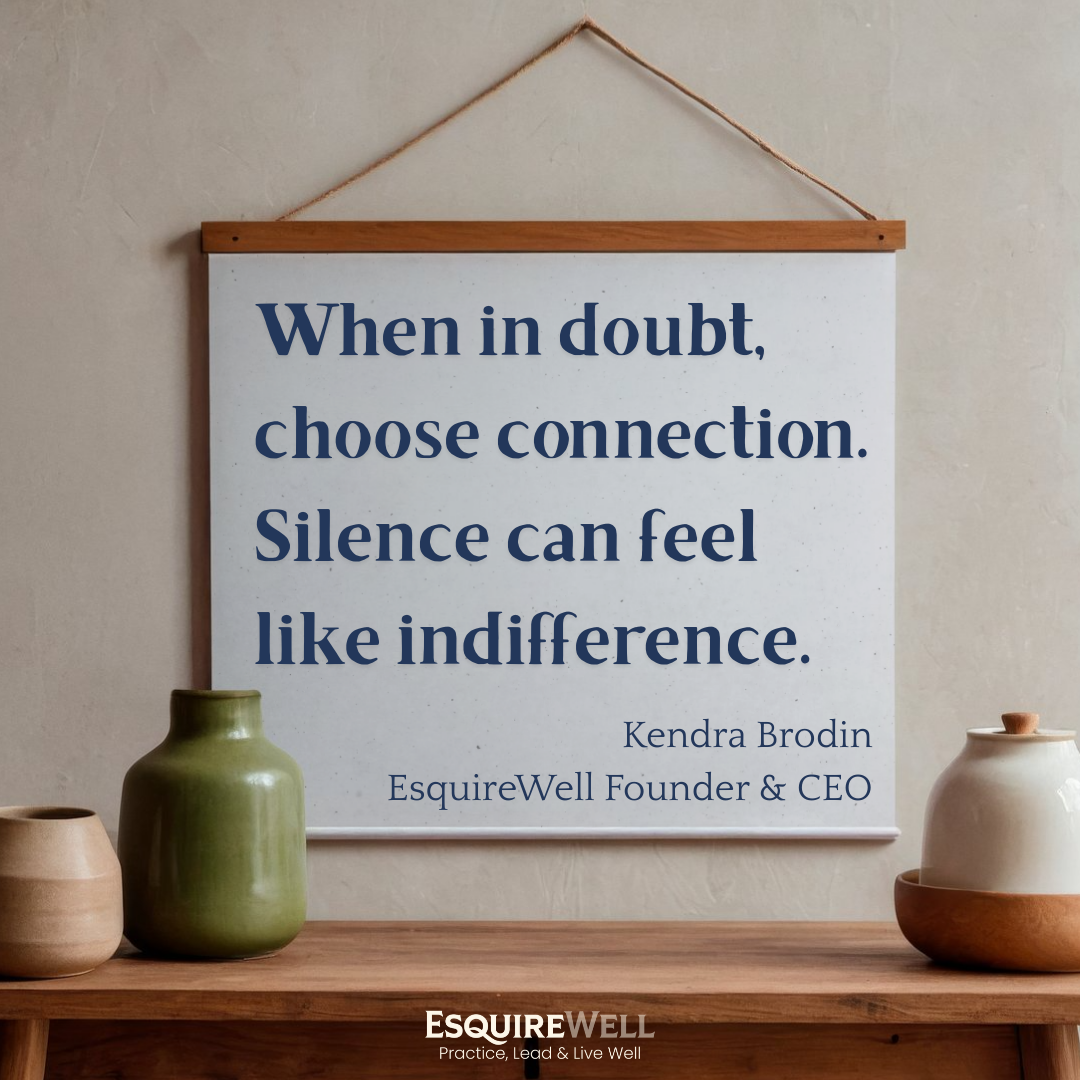
Even when we mean well, silence can feel like indifference.
And it also lands as the opposite of caring or noticing.
Especially during periods of stress, grief, uncertainty, or change - when people are already carrying more than usual - the absence of connection can feel heavier than we realize.
- A short message doesn’t need to fix anything.
- It doesn’t need to be eloquent.
- It doesn’t need to come with solutions.
It simply needs to signal: I see you. I care about you.
Why Small Reach-Outs Matter at Work
In the legal profession, where pace, pressure, and performance dominate the day-to-day, it’s easy to underestimate the power of a simple check-in.
But from both a professional and well-being perspective, those moments matter.
A brief “How are you doing - I know you have a lot going on right now?” or “How are you holding up?” (and sticking around to really hear the answer) can:
- Reduce isolation during high-stress periods
- Build trust and psychological safety
- Signal humanity without lowering expectations
- Help people feel steadier and more supported - which improves focus and judgment
These aren’t soft outcomes. They’re capacity-building ones.
When people feel seen, they conserve energy and feel supported.
But when they feel alone, they expend energy just managing that feeling of loneliness and isolation.
And just like I had noticed that the person in my life hadn’t reached out when they were close to me, your colleagues are noticing when you don’t touch base or check in with them, especially when you know they might be struggling in some way.
You Don’t Have to Say It Perfectly
One of the most common reasons people don’t reach out is the belief that they don’t know the “right” thing to say.
But usually, the most effective messages are often the simplest:
- “I’ve been thinking about you. I wanted to check in and see how you’re doing.”
- “I know some hard things have been happening. How are you doing?”
- “I don’t need a response, but I wanted you to know I’m here.”
- “I really appreciate your hard work/contribution/engagement/etc. Thanks for being a part of the team!”
- “I’m here for you. How can I help or support you?”
No fixing. No forcing. No pressure.
Just presence and a simple acknowledgement.
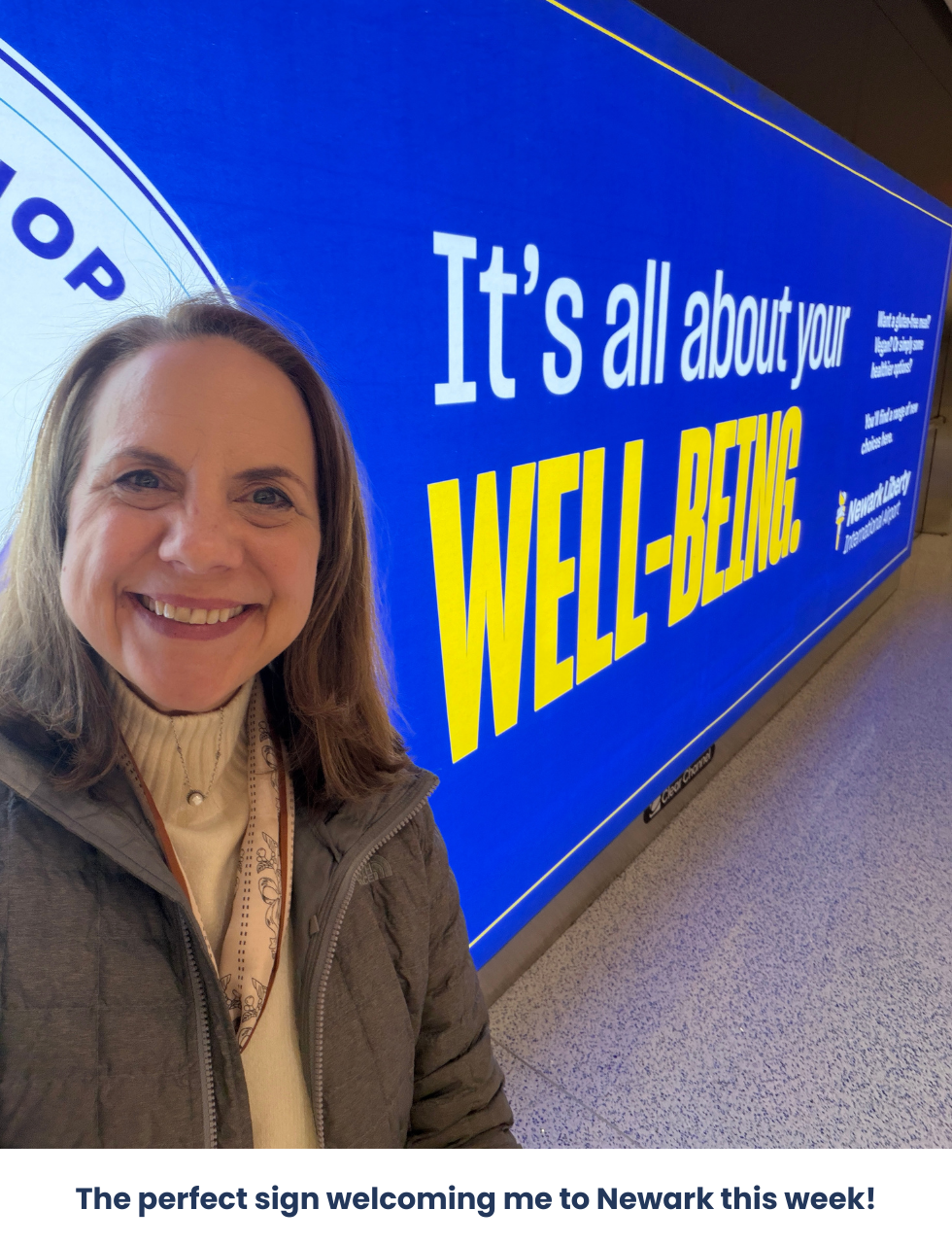
I’m actually in New Jersey right now, and we covered this in a talk I gave yesterday, rooted in my “Culture of Caring” curriculum. One of the wise participants shared that this is how she creates belonging and connection on her team - just making it a regular practice to check-in gently, simply. Don’t make it harder than it needs to be!
A Small Yet Sustainable Professional Practice
This isn’t just about leaders checking in on teams - although that matters deeply.
It’s about colleagues, friends, family, mentors, and peers.
It’s about recognizing that everyone you work with is carrying something you cannot see, and that small gestures of care can steady someone more than you know.
Especially right now.
So here’s a gentle question to sit with this week:
Who have I been thinking about and haven’t yet reached out to?
Sometimes, the most meaningful leadership move or gesture of care is a simple message sent at the right moment.
And sometimes (maybe most times), that message matters far more than we realize. 🤍
Recommended Resources
[Article] Thinking About Reaching Out to Someone? Science Says Do It | Greater Good Magazine
[Video] Amy Edmondson's Building a Psychologically Safe Workplace | TEDxHGSE
[Article] The Quiet Death of Workplace Acknowledgment | Psychology Today
[Resource] The 5 Cs of Acknowledgement for Grateful Leaders | International Institute for Learning