Giving Grace ≠ Lowering the Bar
Jan 29, 2026
Lately, I’ve been returning to a simple reminder - one I’ve been offering to my team, my clients, and quietly practicing myself:
Have grace.
With yourself.
And with others.
It sounds straightforward. It’s anything but.
There is a lot happening right now. In our communities. In our workplaces. In people’s personal lives.
As a proud Minnesotan, there’s a lot happening right in our community. It’s making national news, so most people know what’s going on.

For others, their stress, strain, and worries are less visible, quieter, gently hidden.
But that doesn’t make it any less real.
Everyone is carrying something, even when it doesn’t show up on a calendar, in a meeting, or in a performance review.
When pressure is high, it becomes harder to show up as our best selves.
Focus narrows. Patience shortens. Our nervous systems stay just a little more activated than usual.
We move faster, listen less, and make assumptions we wouldn’t normally make.
That isn’t a failure of character or professionalism. It’s a human response to sustained load, and most of us have been operating under sustained load for quite some time.
What Grace Is (and Isn’t)
Grace is often misunderstood in professional environments. It can sound like softness, lowered expectations, or a lack of accountability. But real grace - practiced well - is none of those things.
Grace doesn’t mean avoiding hard conversations.
It doesn’t mean excusing impact or overlooking responsibility.
And it certainly doesn’t mean abandoning standards.
Grace more often means:
- Offering the benefit of the doubt before assuming intent
- Taking a moment to pause before reacting
- Staying curious a moment longer than feels comfortable
It means recognizing that you rarely know what someone else is holding - grief, fear, exhaustion, uncertainty, pressure to perform, or something they haven’t yet found words for.
Why Grace Matters Everywhere
And this isn’t just a leadership or professional skill.
Grace matters between colleagues.
Between clients and advisors.
Between partners.
Between parents and children.
And between the person you were yesterday and the person you’re trying to be today.
In demanding professional environments, grace creates space. Space to think clearly. Space to regulate before responding. Space to choose judgment over reactivity.
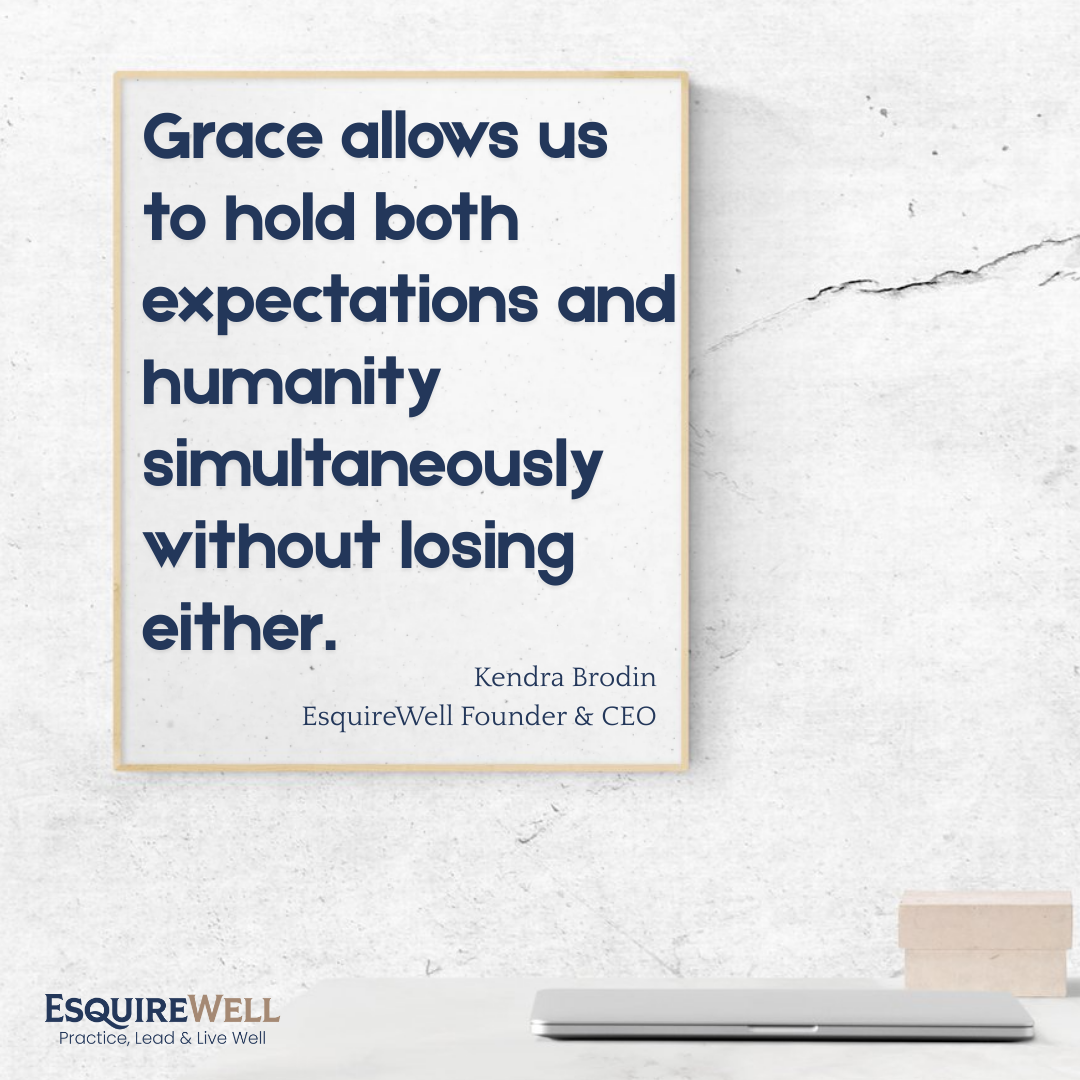
Grace allows us to hold both expectations and humanity simultaneously without losing either.
From a performance perspective, grace reduces unnecessary friction. It keeps small missteps from becoming lasting ruptures. It preserves trust, which is far more fragile than most systems acknowledge.
From a well-being perspective, grace is stabilizing.
Constant vigilance, assumption-making, and unresolved tension take energy. They narrow focus. They quietly and consistently tax the nervous system.
A Question to Carry This Week
Grace restores capacity and creates (or strengthens) connection and trust.
It reminds us that not every moment requires immediate resolution, sharp edges, or certainty. Sometimes those moments instead require steadiness, restraint, and care.
As you move through this week, it may be worth asking a gentle but honest question:
Where might a small pause, a softer assumption, or a bit more grace change the tone of an interaction - for you or for someone else?
Not to lower the bar.
Not to avoid accountability.
But to meet the moment with clarity, generosity, and sound judgment.
Because how we show up in moments of strain - especially when no one is watching - shapes our relationships, our cultures, and our own internal sense of steadiness more than we often realize.
And sometimes, giving grace is the most grounded, intelligent move we can make.
Thank you to so many of you who have sent your words and notes of love, support, and solidarity knowing that I’m here in Minnesota, trying to show up at my best not only for my treasured clients and connections, but also for my loved ones and community as we navigate these turbulent waters together. ♥️
Recommended Resources
[Article] The Benefit of the Doubt: A Gateway to Trust | ADR Times
[Video] Mark Guilbert: Leadership Through Empathy and Grace | TEDTalk
[Article] What Happens When You Give People the Benefit of the Doubt | Greater Good Magazine
[Article] The High-Performance Paradox: Having Expectations AND Extending Grace | Leaders for Leaders