The Holidays Are Busy. Your Mind Doesn’t Have to Be.
Dec 04, 2025
For many, holidays usually come and go - full of family, memories, good food, and the kind of joy that only connection brings.
But then comes the aftermath: the clean-up, the next holiday plans, the messages, the emails, the planning and logistics, and the quiet (or, sometimes loud) pressure to keep moving forward.
And in the middle of that rhythm, we realize how easy it is to lose touch with our own internal rhythm.
A few times this seasom, I caught myself pausing. Not because I planned it, just because I felt the tension rising, and I needed a breath before diving back in.
This week’s pause came from an unexpected place: a plane seat, right before takeoff.

Somewhere between reviewing my notes for the NALP PDI conference and mentally organizing a very full family weekend ahead - taekwondo belt test, holiday concerts, and the kind of schedule that can easily sweep you away if you’re not intentional. I caught myself running my fingers over the beads on my bracelet - a little grounding ritual I use when I need to slow my breath and come back to myself.
So lately, I’m finding pauses wherever I can. Even on a plane. Even for 10 seconds. Because those tiny moments of reset are what help me stay steady, present, and at my best - for my work, my family, and myself.
Small interruptions - pausing to take three slow breaths (exhale longer than inhale) when feeling overwhelmed, time spent with friends, some music-making (solo or with others), a soft exhale before a call or presentation, a split second to notice and name how I felt - did something surprising: those moments made the rest of my week feel more spacious, more intentional, more grounded.
They were much-needed reminders that, especially during hectic seasons like holidays, end-of-year deadlines, and transitions, you don’t need a long break to stay grounded and effective.
I was recently quoted in my favorite magazine, Real Simple, on how I protect my energy during the holidays and shared, “Boundaries aren’t walls; they’re guardrails that allow you to enjoy the season without running yourself off the road.”
Why Micro-Pauses Matter - Especially During Busy Seasons
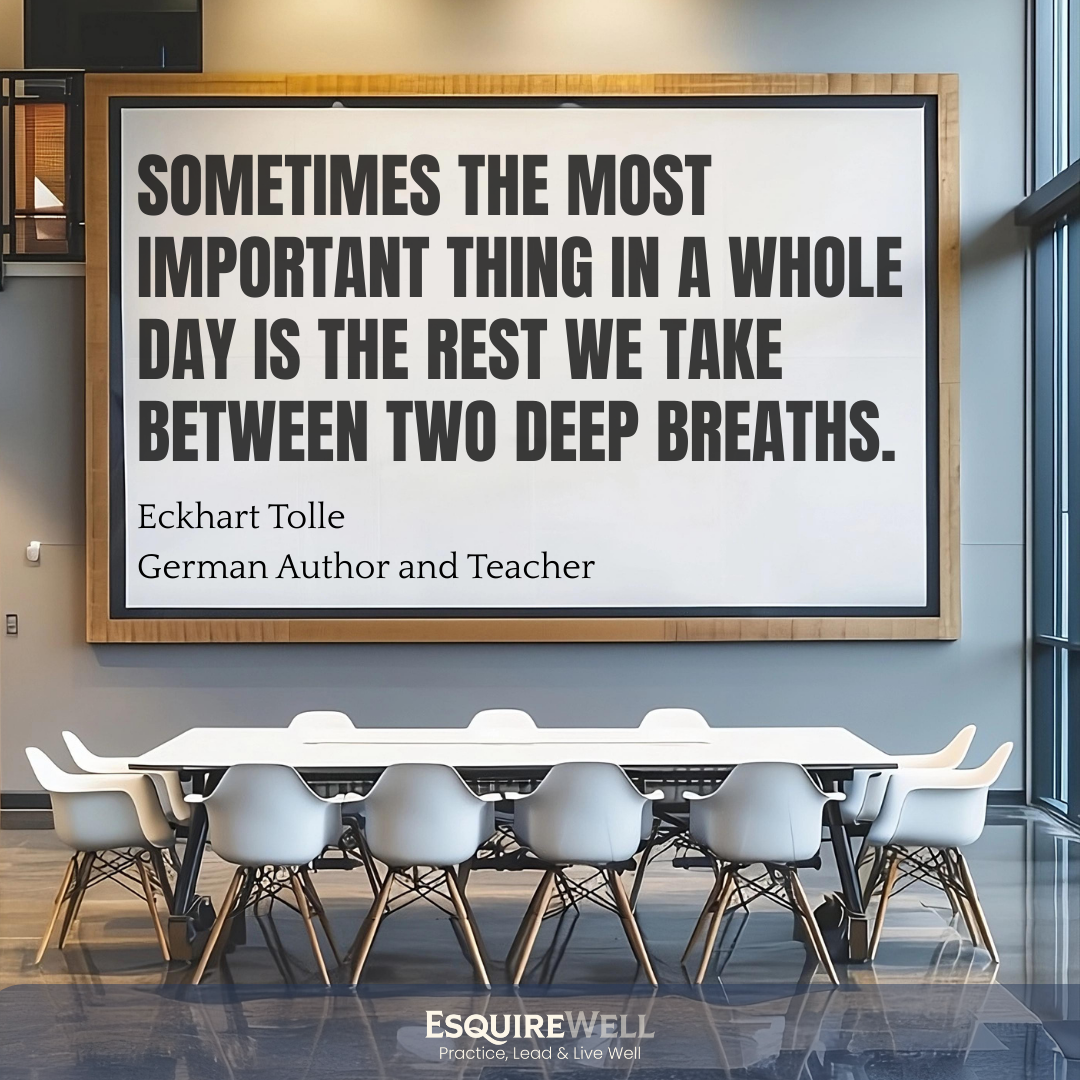
In law (and frankly, in life), we often imagine well-being or steadiness as something that requires a big chunk of time: a weekend getaway, a day off, or a long stretch without obligations. Those things are wonderful. But often (or usually), they aren’t possible.
What actually sustains us - especially when life feels like a whirlwind - are these micro-moments of intention.
- Cognitive clarity - A brief pause clears the fog. It helps you think strategically instead of reactively.
- Emotional regulation - When stress builds fast (holidays, busy seasons, deadlines), a tiny reset helps you respond rather than react.
- Sustainable capacity - Small resets prevent the slow accumulation of tension that leads to burnout, overwhelm, or fatigue.
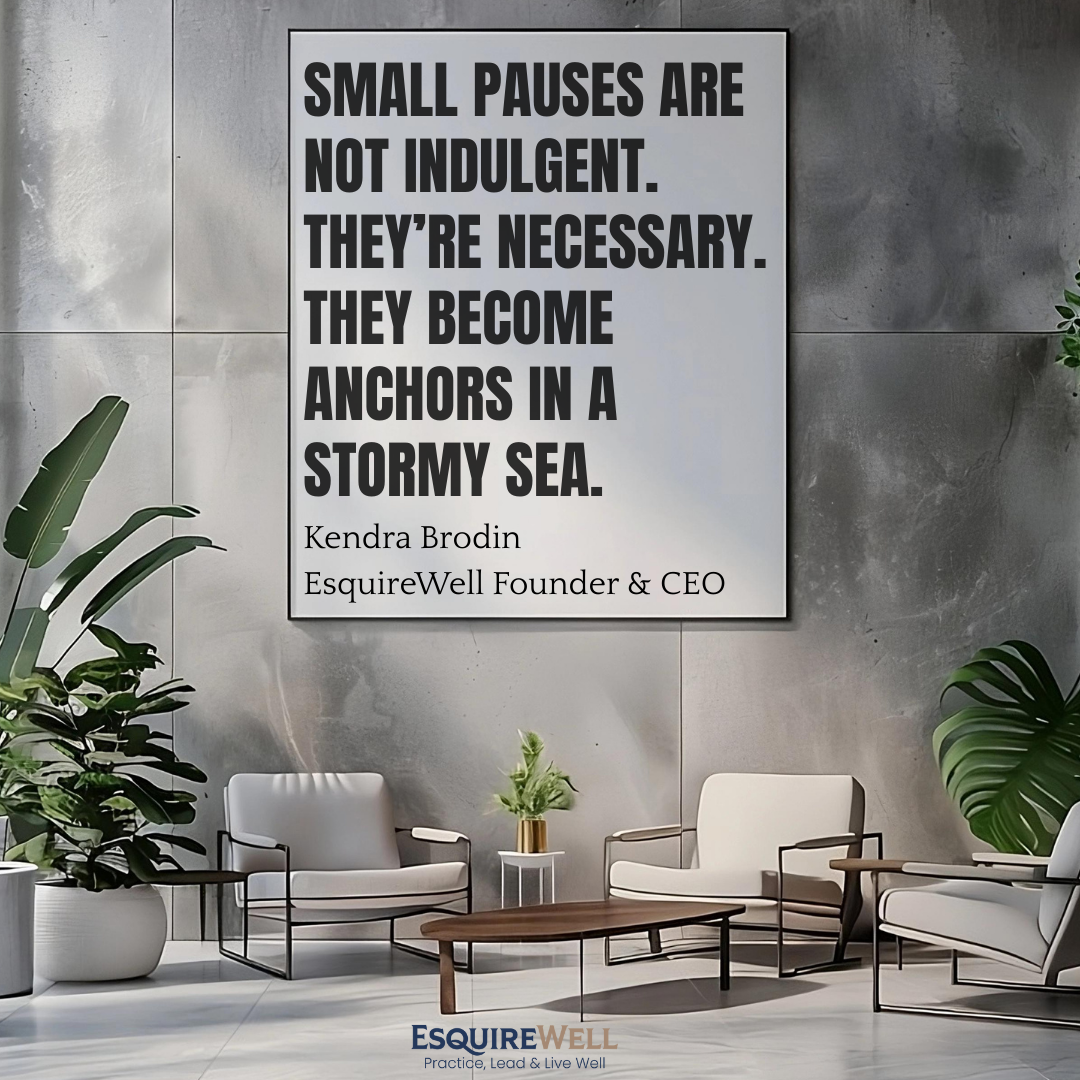
Small pauses are not indulgent. They’re necessary. They become anchors in a stormy sea.
Quick Pause Practices That Fit Even a Packed Schedule
- The 3-Breath Reset: Three slow, intentional breaths. Just enough to shift your nervous system from urgency to calm.(Remember: make your exhale longer than your inhale.)
- The “Name It” Pause: Take a moment to silently acknowledge what you’re feeling: overwhelmed? restless? excited? tired? Naming it creates clarity. If you’re unsure of how to “Name It,” reply to this email, and I’ll send you my Feelings Wheel resource.
- The “What Actually Needs to Happen?” Check-In: Before responding to a fast-paced email or an urgent request, ask: “Am I reacting to pressure, or responding from purpose?”
- The Transition Pause: Between calls or meetings, or just before you open the next tab: pause, exhale, and reset.
- The Social Pause: A quick text to a friend, a kind word to a colleague, or a moment of eye contact and acknowledgment; these relational pauses often bring more steadiness than you expect.
Why This Matters for Leadership, Performance & Well-Being
Micro-pauses aren’t soft skills; they are performance anchors.
They help you:
- Think more clearly
- Choose your tone and timing instead of acting on autopilot
- Stay emotionally regulated even under pressure
- Preserve long-term resilience (versus the “burnout then repair” cycle)
Take a breath. Take a beat. Let yourself fully arrive wherever you are. Don’t miss the joy of the moment - and the season!
Recommended Resources
[Article] Manage Your Energy, Not Your Time | Harvard Business Review
[Resource] One Minute Reset | Headspace
[Article] Feeling Stressed At Work? Take Microbreaks | Psychology Today
[Video] How Rest Can Make You Better At Your Job | TED Talk