Two Words We Try to Avoid (But Shouldn’t!)
Jan 27, 2026
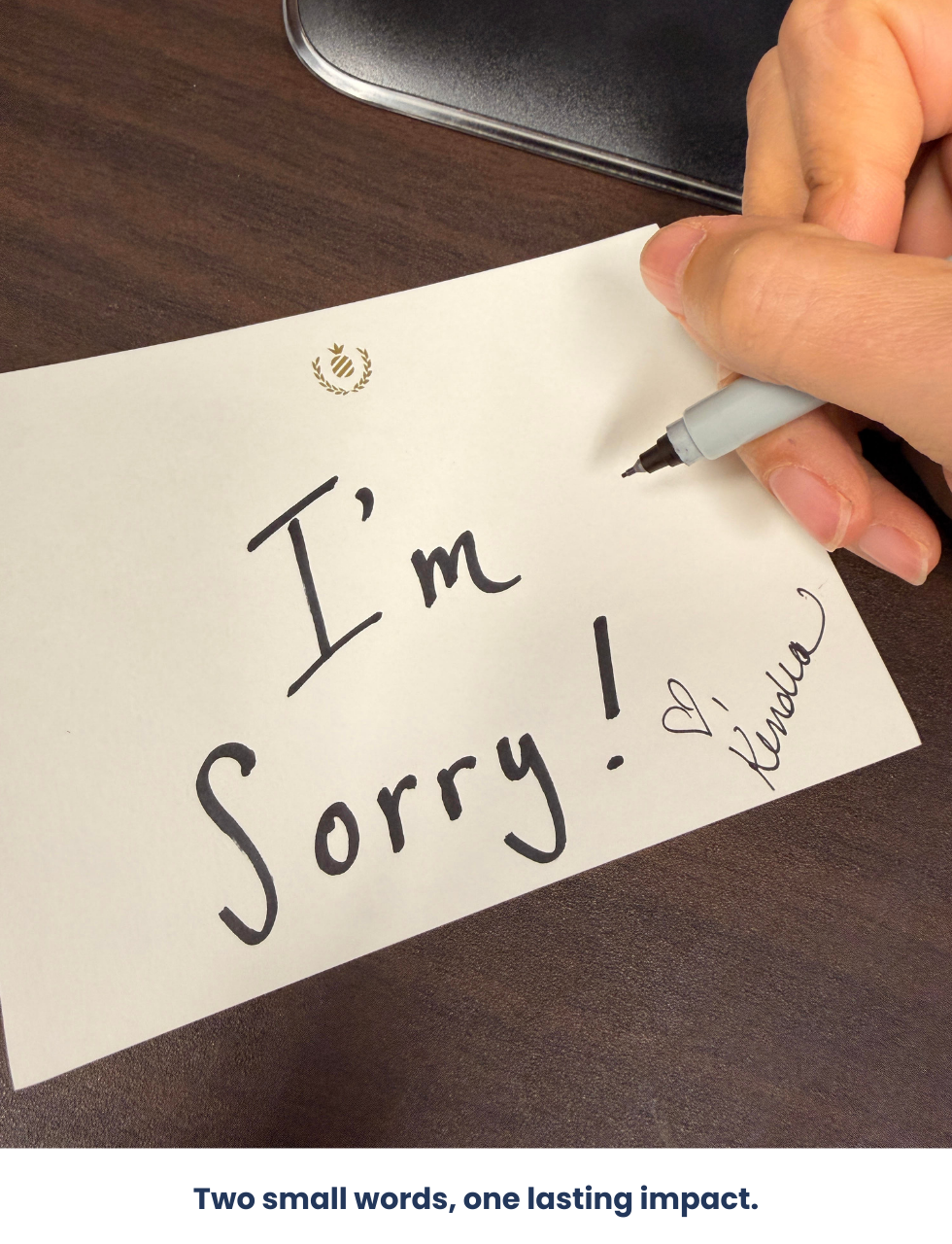
“I apologize.” Two small words that carry a lasting and immeasurable impact.
Earlier this week, I needed to say them myself. (Ugh!)
I was moving fast - too fast - with too much to do, and too many plates spinning trying to do too many things at once.
In trying to be efficient, I created confusion instead. Momentum turned into mixed signals, and I could feel the frustration ripple through my team.
So I paused. I named what I saw. I owned my part.
And I cleared the air so we could reset together.
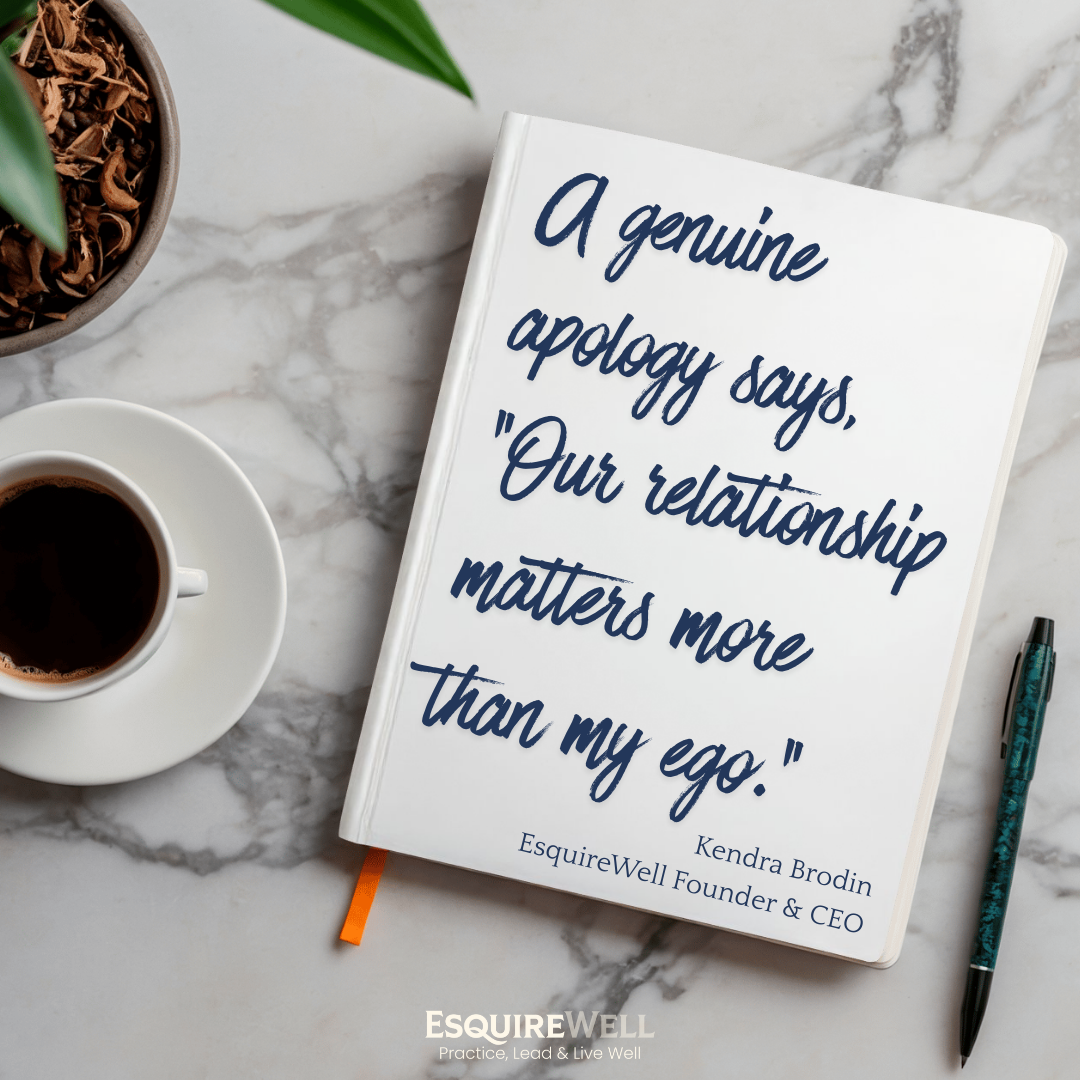
What stayed with me afterward wasn’t discomfort or regret (although it was definitely there during the process!). It was this: A genuine apology says, “Our relationship matters more than my ego.”
Repair Over Reset
Early in the year, many people are focused on resets - new goals, cleaner systems, better habits. But one of the most overlooked practices at this moment isn’t about starting something new.
It’s about repairing something old.
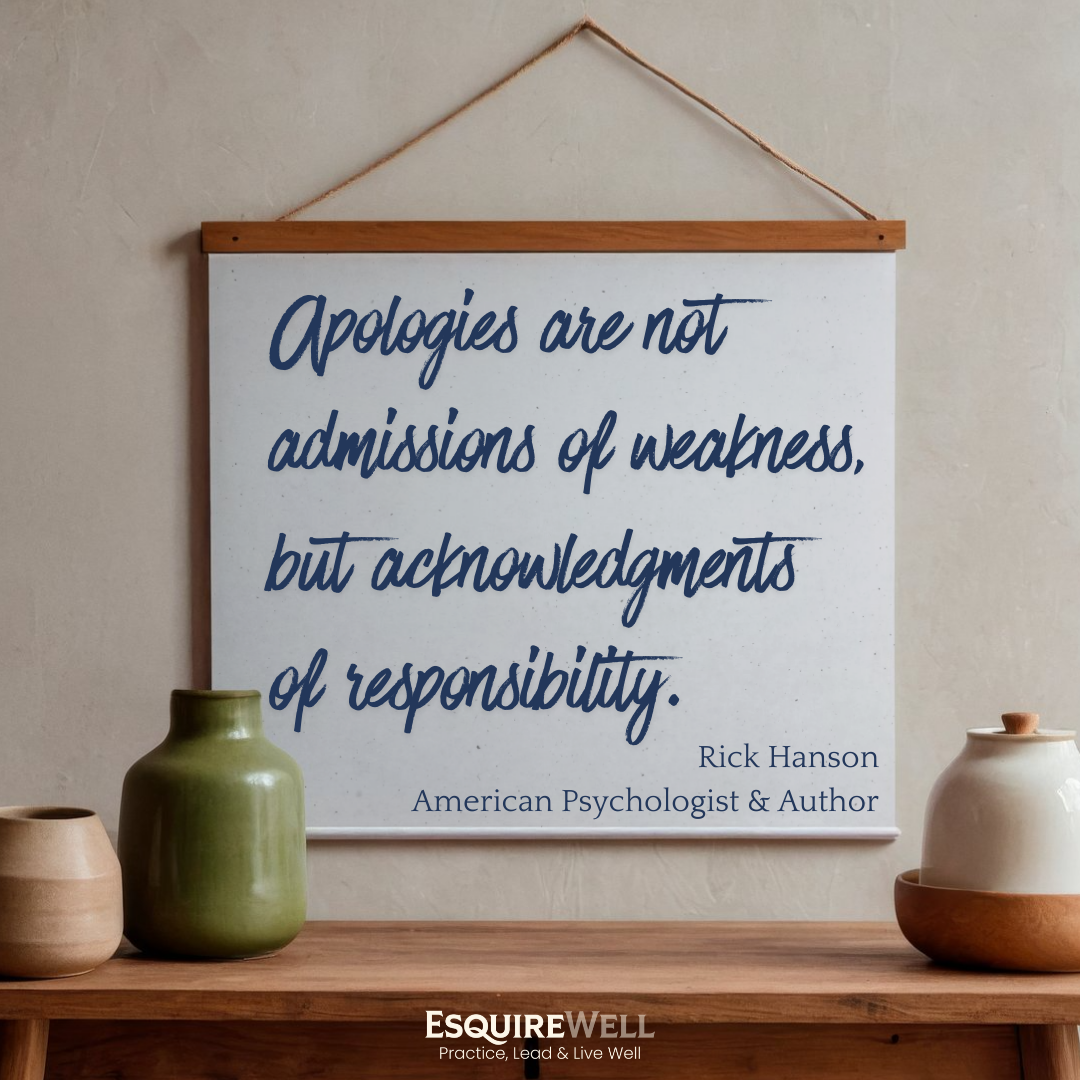
In the professional space, apologies can feel complicated. They’re often conflated with fault, weakness, a hit to the ego, or loss of credibility.
Many lawyers and legal professionals are trained - implicitly or explicitly - to avoid them altogether.
But a well-timed, well-constructed apology is not a liability.
It’s a professional skill, rooted in emotional intelligence.
What a Clear Apology Does
A clear apology does three things at once:
- It restores trust.
- It reduces friction.
- It allows everyone to move forward with focus and clarity.
That’s not a weakness. That’s strategy.
In my experience, most breakdowns at work don’t come from bad intent.
They come from missed communication, pressure, speed, or silence that lingers too long. When those moments go unaddressed, they create drag in relationships, in teams, and in your own cognitive load.
An apology, done well, closes an open loop.
What often gets in the way is the belief that apologizing means over-explaining or self-flagellation. It doesn’t.
In fact, the most effective apologies are restrained and concise. They are clear, specific, and grounded. They are focused on repairing the relationship, rather than preserving ego.
They sound more like:
- “I missed that deadline, and it put pressure on you. I’m sorry.”
- “I wasn’t as clear as I should have been. That’s on me.”
- “I can see how that landed. I should have handled it differently.”
No justifying.
No defensiveness.
Just sincerity.
Professionalism, Capacity, and What Follows
From a professional perspective, a clear apology does important work:
- It models accountability without drama.
- It signals and creates psychological safety
- It preserves judgment and credibility rather than eroding it.
And from a well-being perspective - often overlooked - it’s stabilizing.
Carrying unresolved tension takes energy. It narrows focus. It keeps your nervous system (and others’) slightly on edge.
Repair creates capacity.
As we move into a new year, it’s worth asking a quiet but necessary question:
Is there a conversation I’ve been avoiding because it feels uncomfortable, but would ultimately bring clarity and peace?
Leading well doesn’t mean never getting it wrong.
Practicing well doesn’t mean perfection.
Living well doesn’t mean avoiding hard moments and challenging conversations.
It means having the judgment to repair quickly, cleanly, and with integrity.
That’s the art of apology, and it’s a practice that sets the tone for everything that follows. ♥️
Recommended Resources
[Article] The Power of Saying "I'm Sorry" and "You're Forgiven" | Harvard Business Review
[Video] Eve Ensler: The Profound Power of an Authentic Apology | TEDTalk
[Article] How to Apologize and Why it Matters | Psychology Today
[Podcast] Why You Should Apologize Even When It's Hard To | American Psychological Association